
DEVELOP PRIORITY ACCOUNTS · OUTBOUND OUTREACH
Earn the reply with a reason specific to them.
A stranger inbox is not a channel you rent. Every message spends a little of your reputation. Mplan builds outbound around a reason the reader can verify: a public change, a market event, or an operating condition that person already lives with. AI may draft. A person is responsible for the facts and the send.

On this page

Desired change
Turn outbound volume into conversations worth continuing.
Outbound works when there is a credible reason for one company to contact another. Instead of pushing more names through automated sequences, focus attention on accounts that fit, identify a specific and verifiable reason to reach out, and make the message relevant to the person receiving it.
The goal is not more sends or replies, but more conversations that both sides have a reason to continue.
Capabilities
Make every contact a reason, not a sequence step.
Make every contact a reason rather than a sequence step, so direct contact creates recognition or it stops. This is researched, permission-aware contact with a named person, using a reason they can verify, on infrastructure that can actually be delivered. Email, LinkedIn, and phone are choices that follow the premise. The channel does not create the relevance.
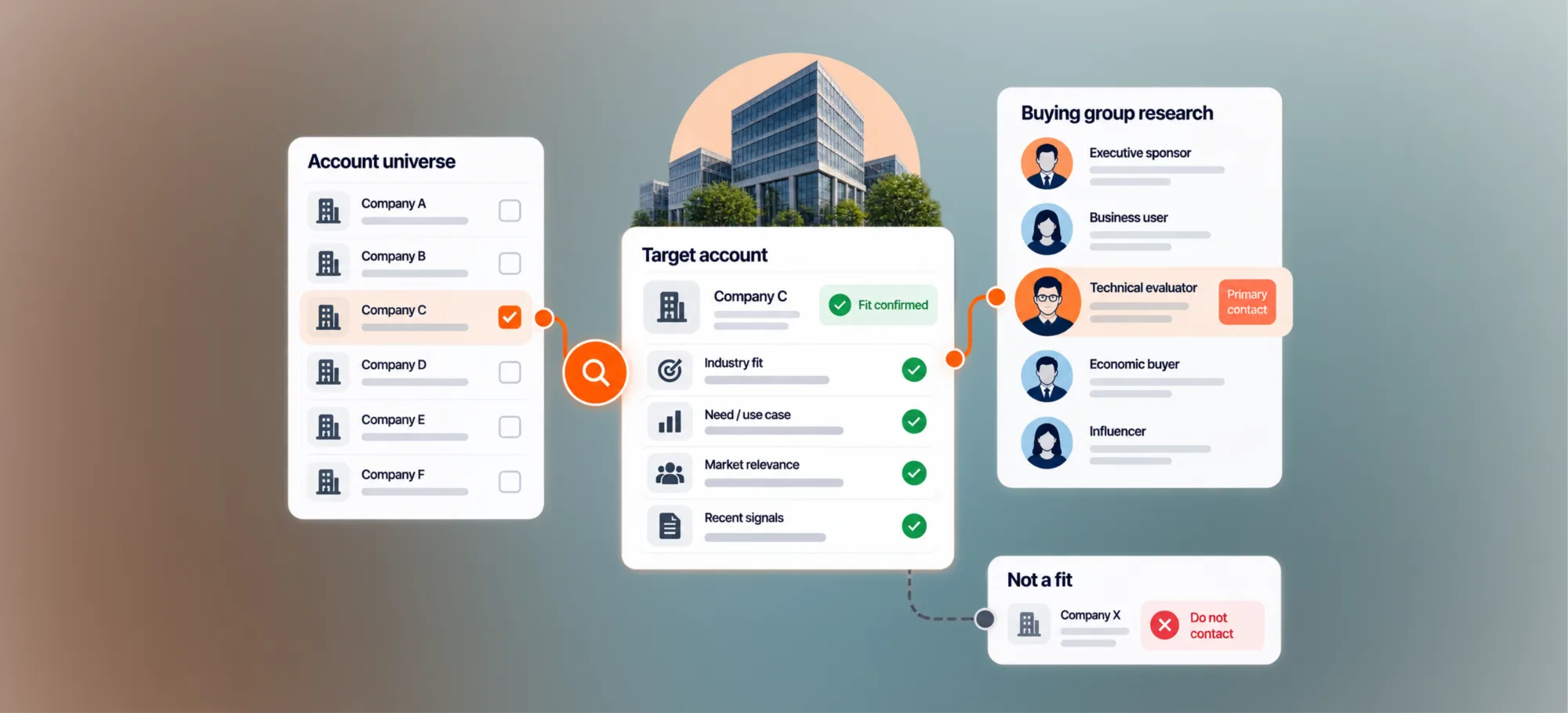
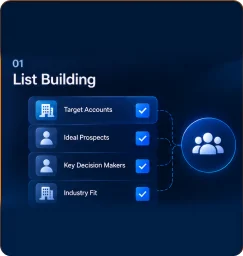
The account fits the written market before anyone writes, and the participant is the person most likely to recognize the issue rather than the easiest title to find. If fit cannot be established, the account is not contacted to see what happens.
A credible reason comes from a public company change, a market event or an operating condition already visible to that role. The request matches the strength of the premise. A sales meeting becomes reasonable after the message has earned one.
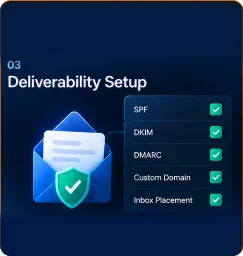
Since 2024, Google and Yahoo enforce what careful senders already practiced: authenticated sending under SPF, DKIM and DMARC, one-click unsubscribe, and a spam-complaint rate under 0.3%. Cross that line and mail stops arriving, often without a bounce you will notice.
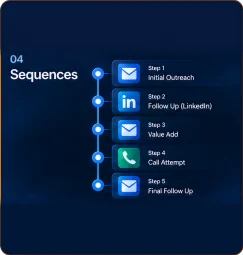
A short sequence is another chance to be noticed, not a substitute for a weak reason. Each additional contact should add context, and if it cannot, the sequence stops. Touches are not added to punish silence.
Research earns the right to make a relevant request.
Account fit establishes whether contact is sensible. A truthful reason for contact shapes the message. A person must read and continue any response in context.

Establish fit
Research the company and participant

State a reason
A specific and truthful message

Read the response
Continue with human judgement
Decision context
What respectful direct contact looks like in practice.
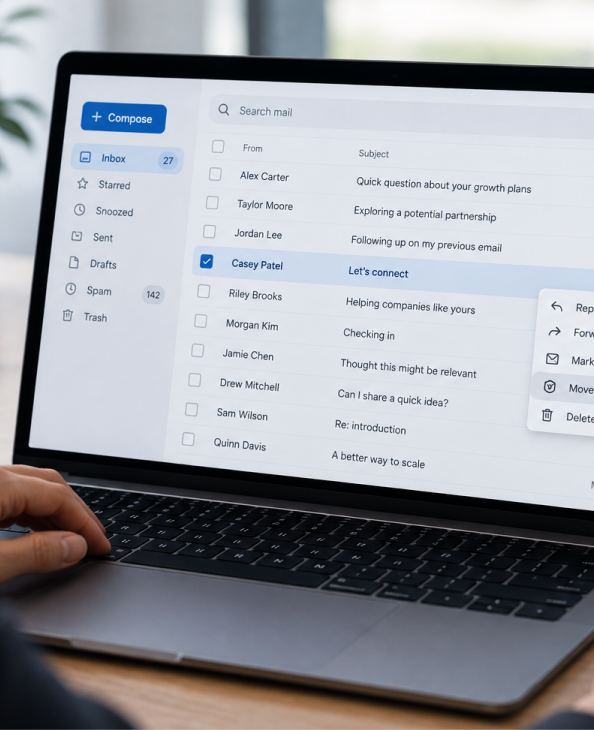
Your market already knows what generic outreach looks like
You may have this problem if:
- Sequences go out because the list exists, not because this account has a reason to hear from you now.
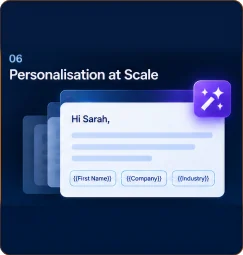
- Personalization is a first name, a city, or a scraped line that does not change the ask.
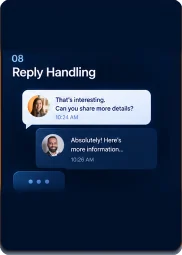
- Replies land in a shared inbox and get a template, or they wait until the interest has cooled.
- Domains are warming in public, or mail has started landing in spam, and nobody owns authentication.
- The team reads silence as the market not being ready, then adds more touches to the same weak premise.
- AI is drafting and sending, and nobody can stand behind a specific sentence if the reader challenges it.
The commercial cost is not only a low reply rate. Good accounts learn to ignore the company before they ever need you. That lesson is hard to unteach, and it is expensive when those same names later appear on an account list.







Fit first, then a reason, then a human
The first set of accounts stays small. The point is to test the rationale, the message, and the ability of the team to answer, not to fill the calendar with sends.

Confirm
The account fits. The participant can recognize the issue.

State
Write the reason from a public change, market event, or operating condition the reader can verify.

Deliver
Authenticate, warm, cap volume, and only then send.

Read
A person answers every reply. Sequences stop when the premise weakens.
From sequence persistence to outreach worth continuing
Good outbound is not defined by how many times a prospect is contacted. Each touch should have a credible reason, add something useful to the previous contact and remain proportionate to the evidence behind it. When the premise weakens, the sequence should stop rather than use persistence to compensate.
| Sequence-led outreach | Reason-led outreach | What changes |
|---|---|---|
| A contact enters because they match a list | The account fits the written market and the participant is relevant to the issue | Outreach starts with a defensible reason |
| Personalization uses names, titles or surface details | The message uses a verifiable company change, market event or operating condition | Relevance becomes something the recipient can recognize |
| The sequence determines the next touch | New context determines whether another contact is justified | Automation no longer creates its own reason to continue |
| Follow-ups repeat the original message | Each additional contact adds a new angle, evidence or useful context | Every touch has a distinct purpose |
| Silence triggers more attempts | Silence alone does not justify another message | Persistence is separated from relevance |
| Every prospect receives the same cadence | The strength of the premise determines the request and level of persistence | Outreach stays proportionate to the evidence |
| A meeting is the immediate objective | A meeting is requested once enough relevance and interest have been established | The commercial ask is earned rather than forced |
| Sequences run until completed | Outreach stops when there is no meaningful context left to add | Stopping becomes part of good execution |
What a defensible outbound motion leaves on file
Depending on market and channel mix, the work produces:
These are research notes, approved copy, and infrastructure you can inspect. If a deliverable cannot explain why this person was contacted, it does not belong in the pack.
An in-scope account and participant list, with sources
Reason-for-contact notes a third party could check
Message and sequence drafts a person has approved
Sending-domain, authentication, and volume-cap setup
Reply ownership and handling rules
A stop list and decline handling
A review of replies, refusals, and redirections
Revisions to the premise or the list when patterns appear
Fit and limits
Who answers when a real person replies.

Works best when
The human handoff is real: a person behind every reply who reads it, keeps the account context and answers the reason this person chose to respond.

Reconsider when
Pause additional outreach when replies enter a generic queue or the team lacks the time to respond to each conversation in context.
Decision guidance
When outbound is the responsible route.
A direct route is the responsible one when you can establish account fit and name the participant, there are checkable reasons to contact at least a first set of accounts, and a person will read every reply and answer it in context.

Automation can support research and drafting while a person remains responsible for relevance. Fluent language increases the reach of a false assumption just as easily as a true one.
Direct contact exposes the strength of the offer and available proof quickly. That is useful, and it is a reason to start small.
Law, platform rules and audience expectations shape the responsible route in each market. Open rates, click rates and raw send volume are delivery diagnostics, never commercial results.
Questions
Questions companies ask before the first message goes out.
What makes cold outreach relevant?
The account fits. The observation is accurate. The reason for contact connects to a decision the participant can recognize. Relevance comes from the premise, not from inserting personal details into a generic message. If the reader cannot check why you wrote, it is not relevant. It is decorated.
Where can AI assist, and who is responsible?
AI can help gather public facts and draft language. A person remains responsible for every assertion, the decision to contact the account, and the response to any reply. Fluency does not make an inaccurate premise acceptable. A motion where the model sends is not this work.
What compliance and consent rules do you follow?
Market-specific law, platform rules, and audience expectations set the route. Contact data needs a lawful basis. One-click unsubscribe is required on email that falls under the 2024 Google and Yahoo sender requirements. A decline ends contact. If a market cannot be approached lawfully, there is no workaround.
When should outbound stop for an account?
When the premise is wrong, the timing is clearly later, the person asks to stop, or replies show the account is not a fit. It also stops when no new evidence can be added. Persistence without a new reason is just noise. It spends reputation you will want later.
Why does deliverability come before copy?
Because unread mail cannot be relevant. SPF, DKIM, DMARC, one-click unsubscribe, complaint rates under 0.3%, warmed domains, and bounce control decide whether the sentence arrives. Teams that write first and authenticate later often discover the program only in spam folders.
Can we start with a large list?
The first set stays small on purpose. A short list tests whether the rationale, the message, and the human response capacity are ready. Large lists hide a weak premise behind averages. They also raise complaint and bounce risk before you know if the reason works.
What does silence mean?
Not enough to declare the market uninterested. Silence can be timing, delivery, the wrong participant, or a premise that did not land. Patterns across suitable accounts matter more than one quiet week. Deliverability is inspected before the offer is rewritten.
Can you run outbound into US or UK inboxes from India?
Yes, with domain warm-up, verified lists and copy that earns the reply. No volume for its own sake, and a person reads every response.