
CREATE DEMAND · LINKEDIN ADS
Reach the buying group, not a job-title list.
LinkedIn will let you buy a title. That is not the same as reaching the people who can approve, block, or use the work. Mplan builds LinkedIn Ads around the buying group inside the accounts you actually want: evaluator, economic buyer, and user. Precision is expensive. Waste is more expensive.
On this page


Desired change
Turn professional precision into buying-group relevance.
LinkedIn gives you unusually precise access to companies, functions, seniority and roles. But reaching the right profiles is not the same as influencing a buying decision.
The opportunity is to use that professional context to reach the accounts that matter, make the argument relevant to the different people shaping the deal, and turn paid attention into qualified commercial conversations.
Capabilities
Use declared identity for an argument the buying group can share.
Use declared identity for an argument the buying group can share, with each role hearing the concern that belongs to them while the account still hears one argument. This is paid professional media against member-declared identity: company, function, seniority, and role. That declaration is why the channel costs more. It is also why a vague message is indefensible here. We start with the accounts and the buying group, then use platform filters as a delivery tool, not as strategy.
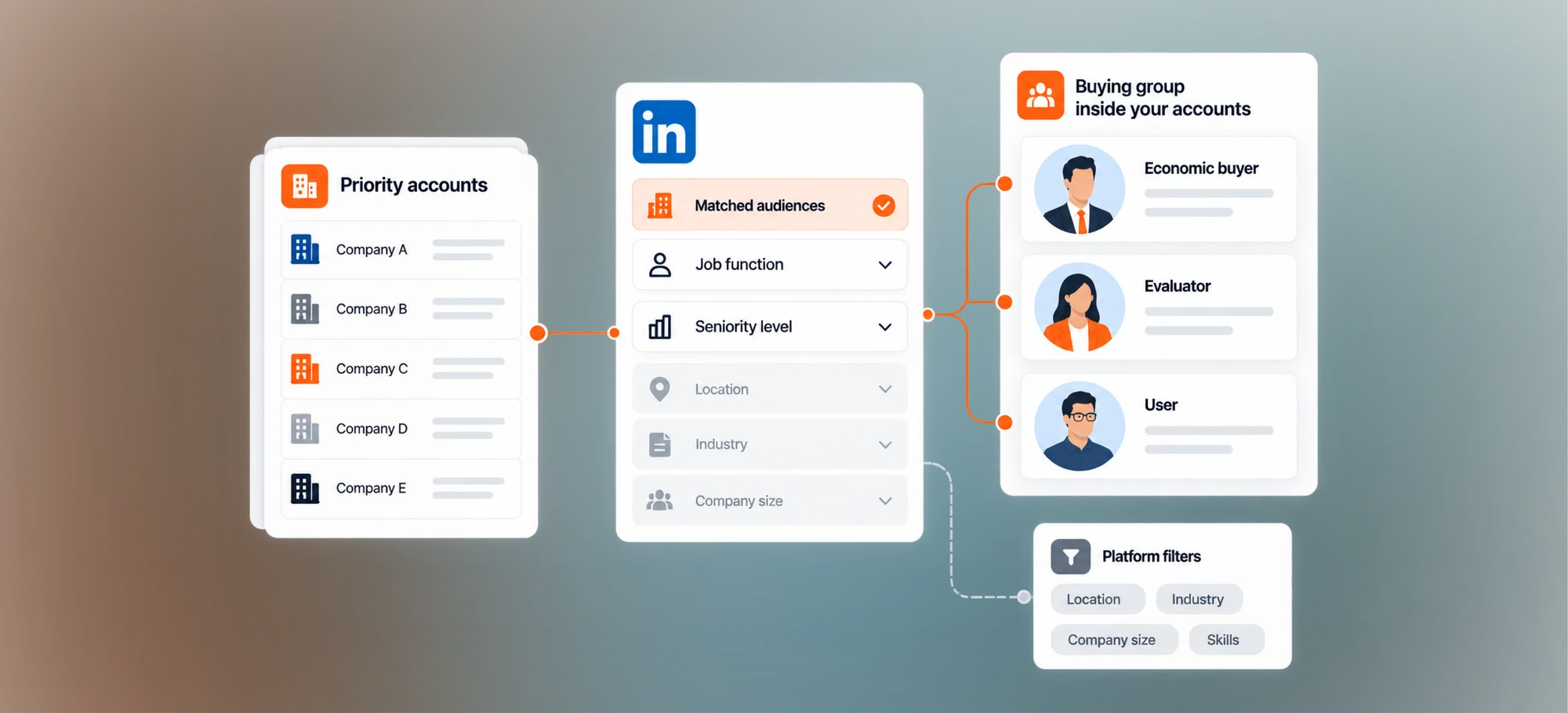
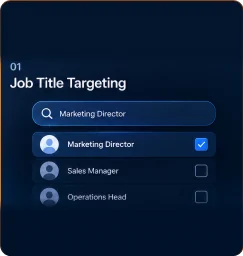
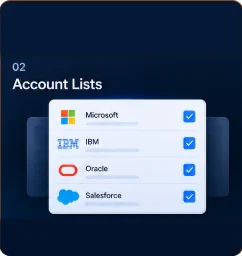
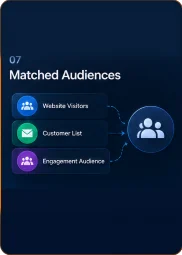
Matched audiences turn your named-account list into something LinkedIn can deliver, then role and seniority find the buying group inside those companies. Platform filters come after the commercial list, not before. Title clouds without accounts spend a professional CPM on people who will never sit in the deal.
A technical evaluator needs implementation confidence. An economic buyer needs commercial rationale. A user wants the current pain gone. Those are different sentences. They are not different brands.
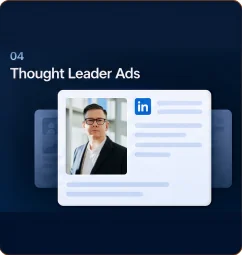
Posts from a named expert regularly beat a polished corporate unit in this feed. People trust people. A logo can sponsor the work. It should not be the speaker when the speaker is the reason anyone would stop.
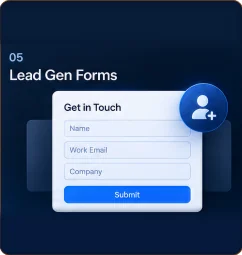
Lead gen forms pre-fill from the member profile and convert more easily than a cold landing page. That ease removes an intent filter, so form leads need a sharper qualifying question and a faster human reply.
Reach roles inside accounts without mistaking precision for relevance.
Professional data can narrow delivery. The message must still respect the participant’s role, the wider buying group and the finite size of the audience.

Priority accounts
Companies worth differentiated attention

Buying roles
Participants who shape the decision

Relevant offer
A reason to pay attention now
Decision context
How to spend a finite professional audience well.

You paid for precision and ran a generic ad
LinkedIn is the one paid social channel where the member told the platform their job. That declaration is the product. When the ad ignores it, you have purchased a luxury environment for a sentence that would have been cheap, and just as ignored, somewhere else. You may have this problem if:
- The audience is a stack of job titles with no account list underneath.
- Every role sees the same corporate claim, then lands on the same overview page.
- Thought leader ads were never considered because the company prefers a logo.
- Lead gen forms convert well, and sales spends the week disqualifying them.
- Frequency climbs inside a few hundred companies and nobody calls it fatigue.
- LinkedIn stays on because it is the B2B channel, even when deal value cannot carry the cost.
The commercial consequence is simple. You rent the most expensive professional feed in the market, then spend it on a message that could have run anywhere. The buying group still does not share one argument, and the next deal still starts cold.











Name the group, then spend against it carefully
Name
Priority accounts and the evaluator, buyer, and user who will sit in the deal.

Split
One account argument, role-level messages, and a person who can carry a thought leader ad.

Offer
A download or a conversation request that matches readiness, with qualification built in.

Pace
Watch coverage, frequency, and fatigue. Refresh the expression before the audience learns to skip you.
LinkedIn does not forgive a vague first month. The audience is too small and too expensive for a fishing expedition. If you cannot name the buying group before the first impression, you are not ready to buy the feed.
From title targeting to the people who shape the deal
LinkedIn makes it easy to build an audience from job titles. That does not make it a buying group. We start with the accounts worth reaching, identify the roles that influence the decision, and give each one a relevant reason to engage. Professional targeting then reflects how B2B deals actually move.
| What happens with title-led targeting | What buying-group planning changes | Why it matters |
|---|---|---|
| Job titles define the audience | Priority accounts define the market first | Spend stays concentrated on companies that could realistically become customers |
| One persona represents the whole decision | Evaluators, economic buyers and users are treated as different roles | Campaigns reflect the multiple people involved in a B2B purchase |
| Everyone receives the same message | One commercial argument is adapted to each role | Each person gets the proof and rationale relevant to their part of the decision |
| More filters are treated as more precision | LinkedIn filters are used to deliver an already-defined commercial audience | Platform targeting supports the strategy instead of becoming the strategy |
| Clicks and form fills define success | Response is connected to account quality, role and sales acceptance | Attention is separated from commercially useful demand |
| Frequency is managed at campaign level | Coverage and fatigue are considered across a finite account audience | The same small buying group is not repeatedly shown an exhausted message |
| LinkedIn CPM is judged in isolation | Media cost is considered against potential deal value | Premium professional reach is judged by the commercial opportunity it can influence |
What the account layer produces
Depending on scope, the work produces:
You should be able to see who was reached inside an account, what they were told, and whether that coverage is worth the cost. A click report without company-level coverage is not enough for a channel this expensive.
Buying-group map for evaluator, economic buyer, and user
Account list rules and matched-audience design
Role-level message and offer matrix
Thought leader ad plan with named experts
Lead gen form and landing-page qualification rules
Frequency, coverage, and fatigue thresholds
Deal-value test for whether the premium belongs
Reporting at company level, not only at click level
Fit and limits
Keep the promise the targeting made.

Works best when
Continue the role-relevant or account-relevant argument on the landing page, establish the value and make the request proportionate to the buyer’s stage.

Reconsider when
Reduce the spend while professional targeting leads to a generic company overview or a request that has not yet earned the audience’s attention.
Decision guidance
When LinkedIn justifies its premium.
LinkedIn justifies its premium when deal value can carry professional CPMs, you can name the accounts and the roles that shape the decision, and subject experts will put their names on thought leader ads.

Professional access carries a premium and the reachable audience is finite. The premium is rational only against deal size.
Repeated exposure can exhaust a small buying group quickly. Fatigue arrives faster than most teams expect, so creative refresh is planned before the first flight ends.
Platform reach remains an estimate of the available member and company data. Coverage and engagement are reported at company level, not only at click level.
Questions
Questions companies ask before committing the LinkedIn budget.
Why does LinkedIn cost more than other paid social?
You are paying for declared professional identity and a finite audience. That premium can make sense when account value supports it and the message uses the precision. It does not make sense as a default B2B tax on a generic claim. If the sentence could run on Meta unchanged, you are overpaying for the environment.
What is a sensible account list size?
Large enough for delivery. Small enough for a specific argument. If the list is a wish list with no commercial capacity behind it, premium targeting is wasted. We size the list against pipeline capacity, not against how many logos someone highlighted in a spreadsheet.
How do you avoid saturating a small market?
Watch frequency, creative fatigue, and account coverage together. Rotate expressions of the same argument. Do not repeat one line until the buying group learns to ignore it. When costs rise and response falls, the audience is tired. Bidding will not fix that.
When is organic LinkedIn plus outbound better than paid?
When the market is tiny, the message needs senior human delivery, or the deal value does not yet justify paid professional precision. Paid LinkedIn is a reach tool. It is not a substitute for a founder who should send twenty specific notes.
Should we use lead gen forms?
Yes, when the asset is worth downloading and the qualification question is sharp. Forms convert more easily because they pre-fill. That is the trap as well as the benefit. If the next step is a serious conversation, a landing page that keeps the role-specific promise usually produces a cleaner signal.
Do thought leader ads require a personal brand program?
They require a named expert and a point of view, not a celebrity machine. The person has to be willing to stand behind the sentence. We will not run thought leader ads as a costume on a corporate claim. A credible practitioner posting once a month beats a ghostwritten executive feed that the market already ignores.
Can LinkedIn replace ABM?
No. LinkedIn Ads can carry the paid layer of account work: coverage, role messages, and professional proof. Account-based marketing also includes sales orchestration, outbound, and the offer those accounts receive. Use both when the account set is worth concentrated attention. Paid access without an account motion is just an expensive audience.