
PROGRAMS · SOCIAL MEDIA MANAGEMENT
Keep real expertise visible between buying moments.
After a good meeting, the buyer opens your founder’s LinkedIn profile and your company page. If they find a CV, three posts from last year, and comments nobody answered, the room gets cooler. We turn what your people already know into a public record they will put their name on, on accounts you control, with a named person replying to what comes in.
On this page













Desired change
What they find should match what they heard.
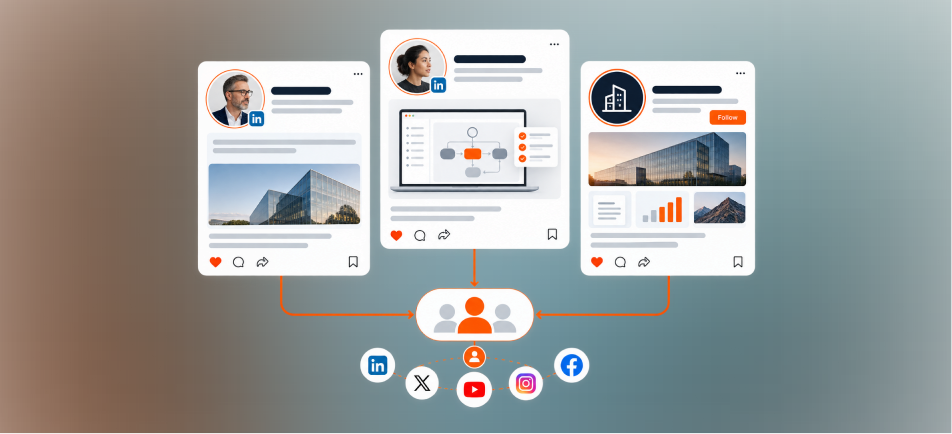
The founder and two practitioners post what they actually think, in their own words. The company page holds the record: the offer, the people, the work.
The accounts are yours and secured. Comments and messages reach someone with a name. Branded search and “how did you hear about us” are watched next to the likes.
Capabilities
What the social program actually covers.
The Mplan Buyer Continuity Protocol is our name for one habit: what a buyer hears in the room has to match what they find when they look you up. The work is still ordinary: profiles, posts, replies. The difference is that each piece is signed by a person who means it, and the accounts are secured before anything is amplified.
Decision context
What changes, and how you will know.
Most of your market is not buying this quarter.
You may have this problem if:
- The founder profile is a CV with three posts from last year.
- The company page could belong to any vendor in the category.
- Sales hears “we looked you up” and then a pause.
- A former employee or an old agency still holds admin rights.
- Experts refuse to post because every draft comes back committee-smooth.
- Comments and direct messages sit unanswered, or nobody knows whose job it is.
The damage is a cooler room. The buyer has already formed a view, and the view is thin.
From a CV and a logo to a record buyers trust.
The posts are still posts. What changes is who signs them, where they live, and what happens after they are read.
| Today | What this program adds | Desired state |
|---|---|---|
| The founder profile reads like a CV | A profile built around the decisions the founder actually makes | Buyers meet a person with a point of view |
| The company page could be any vendor | The page carries the offer, the people, and the work | Buyers can tell what you do and who does it |
| Expertise lives in calls and decks | Working sessions turn it into posts the expert signs | What your people know is public and attributed |
| One feed, one voice | Founder, practitioner, and company page, each with a job | The record survives one person going quiet |
| Posting when someone remembers | A rhythm the experts can keep | Presence between buying moments, not only around them |
| Admin rights with an old agency | Accounts owned by the company, secured, recorded | You control your own record |
| Comments unanswered | A named owner and a reply expectation | Buyers get a reply, and sales gets the lead |
| Success measured in likes | Branded search and self-reported source watched beside platform numbers | You know whether buyers arrive with a clearer picture |
This is not a posting service. It is the work of making the public record say what your best people say in the room.
Professor John Dawes of the Ehrenberg-Bass Institute put a number on the quiet stretches in 2021, in work for the LinkedIn B2B Institute: up to 95% of business buyers are not in the market for a given category at any one time. It is a rule of thumb, not a measurement, but the point holds. A Gartner survey of 632 B2B buyers, published in June 2025, found that 69% had met inconsistencies between a supplier’s website and what its sellers said. Social is one more place that gap opens, and buyers check it without telling you. That is why Mplan secures the record before amplifying it.
Eight checks
Eight things we check before we amplify anything.
Any one of these can undo the rest, so they come first.
- Control. Admin rights, recovery details, and two-factor protection sit with the company.
- A named expert. At least one person will stand behind a point of view.
- Consistency. The profiles do not contradict the website or the sales pitch.
- Approvals. Someone signs off claims and client mentions, at a known speed.
- Permission. No client name, result, or confidential detail goes out without it.
- Replies. Comments and messages have an owner.
- Platform fit. Every network in the plan has your buyers on it.
- Baseline. Branded search and self-reported source are recorded before we start.
If one fails, it gets fixed before any paid support, advocacy push, or founder campaign. The Programs page explains the method behind the checks.







From working knowledge to a public record.
If the source list is thin, we publish less, not filler.

Secure
Move the accounts to the company, lock them, and record who holds what.

Correct
Rewrite the founder, expert, and company profiles to the current offer.

Publish
Run the working sessions, draft, get the expert’s words, post on rhythm.

Answer
Reply to what comes in, pass leads to sales, watch branded search next to the likes.
What an editorial program leaves published.
Depending on scope, the work produces:
These are profiles, posts, and records you can inspect. Not a slide that says engagement is up.
Voice map for founder, experts, and the company page
Platform decision, including what we will not run
Account access record and security setup
Approval and escalation path
Rewritten founder, expert, and company profiles
Topic list drawn from sales questions and real work
Posting rhythm the team can keep
Founder and expert posts, in their words
Company-page versions of the same ideas
Reply rules with a named owner
Baseline and monthly report: branded search, self-reported source, platform numbers
Stop-list: topics, tones, and networks we will not chase
Fit and limits
When social deserves priority.

Works best when
The offer is clear enough that a public argument will not need a rewrite every month, subject experts will give 30 minutes a week, buyers or candidates already check people and company pages before they reply, and you can live with influence that shows up later, in branded search and in what people say on calls.

Reconsider when
Nobody inside the company will put their name on a point of view, positioning is still unresolved, the chosen platform has no real audience for your buyers, or you want activity rather than a record someone can stand behind.
We do not guarantee reach, followers, engagement, or leads, and we do not publish a founder voice the founder has not accepted. Paid social media buying sits under Paid Ads.
Questions
Questions companies ask before they give the team time.
Should the founder or the company page lead?
Different jobs. A founder or practitioner carries a point of view in a natural voice. The company page holds the record and connects those ideas to the offer, the people, and the work. If every personal sentence reads as approved, buyers stop trusting the person. If the company depends on one feed, the record dies when that person goes quiet.
How much time do you need from our experts?
About 30 minutes a week for each person who publishes: one working session, one review of the draft. We bring the questions, the sales objections, and the structure. They bring the view and the byline. If they will not give that time, do not buy this work.
Do you post from our accounts, or do our people post?
Both work. We can draft, edit, schedule, and adapt formats. The named person still approves the words. Company-page operations can sit with us once the register is agreed. Admin rights stay with your company in every model.
Which platforms?
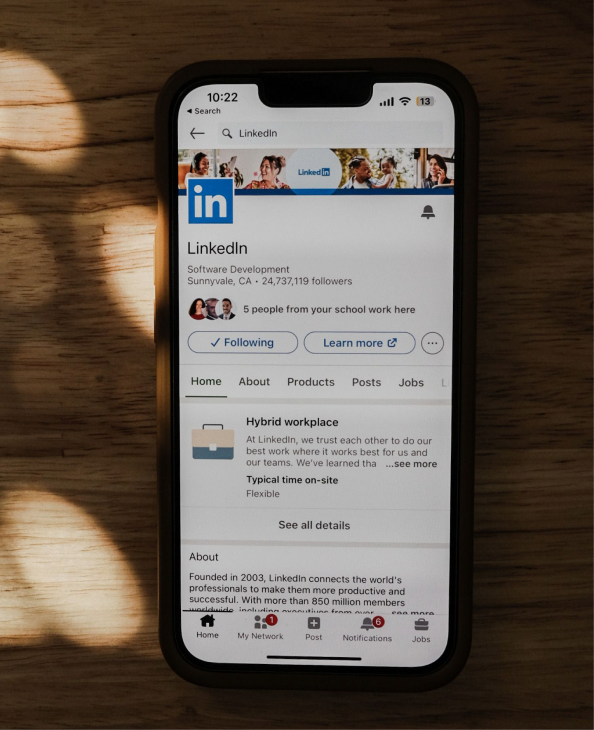
For most B2B firms, LinkedIn first and often only. We add X, YouTube, or Instagram when your buyers are there and you can keep the rhythm. A network with no buyers on it is a costume.
How do you measure B2B social when most influence is not a click?
Direct response is counted when it happens. The more common path is quieter: someone reads, remembers, and later searches your name or tells sales how they heard of you. So branded search and a “how did you hear about us” field sit next to the platform numbers, each with its own meaning. A like is not demand. A profile visit is not a lead.
What if a post goes wrong?
The approval path decides that before it happens: who can pull a post, who speaks to a client mentioned in error, who answers a hostile comment. You will have it in writing in the first week. We do not do crisis communications or legal review.
Is this a one-off project or a retainer?
Two levels. The Minimum Program secures the accounts, corrects the profiles, agrees the voices, and names the owners. The Performance Program is the continuing editorial operation on top of that. A company with a sound record and willing experts can start at Performance. The review decides.
When is social a waste of money for B2B?
When nobody will contribute real expertise, when the platform has no audience, when the company wants motion without a point of view, or when every post has to survive a committee that sands off the sentence that made it worth reading. Spend the money on a clearer offer instead.
We map who can speak, on what, and in what register: the founder on decisions, a practitioner on method, the company page on the record. Then we decide which networks earn a place. For most B2B firms that is LinkedIn first and often only. If your buyers are not on a platform, we say so, and it stays out of the plan.