
DEVELOP PRIORITY ACCOUNTS · ACCOUNT-BASED MARKETING
Concentrate on the accounts worth winning.
Most B2B teams already have a list. Few have a list that actually governs the work. Mplan starts by deciding which companies deserve research, media, content and senior time, then allocating that attention in tiers the team can sustain. If every logo is strategic, nothing is. The program reports at the account level.

On this page

Desired change
Turn a list of target accounts into a shared commercial priority.
ABM should do more than put familiar logos into campaigns. The opportunity is to decide which accounts genuinely justify deeper attention, then align research, content, media and sales around that finite set. Each account receives only the depth its value and context can support, so the list becomes a working commercial plan rather than another targeting preference.
Capabilities
Give the company one finite set of accounts to win.
Give the company one finite set of accounts to win, so the list tells research what to study, media what to buy, content what to write and sales where to spend the week. This is coordinated research, media, content, and commercial attention around a finite set of accounts that can justify the cost. The list decides what everyone works on. Intent and identity data can guide research, and they remain incomplete. A person still decides how an account is treated.
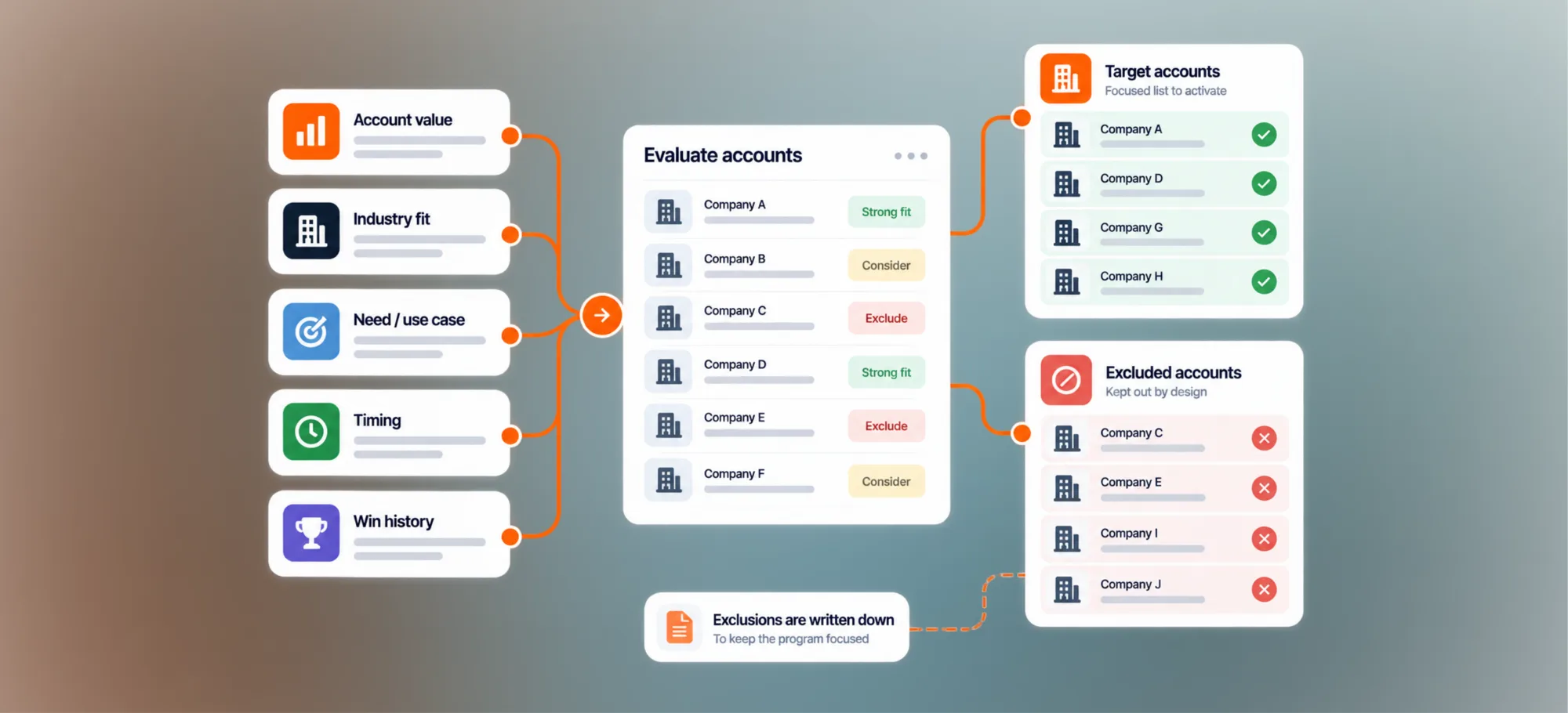
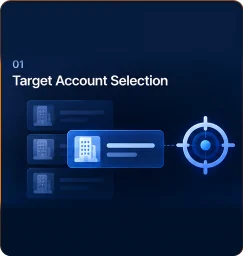
Account value, fit, need, timing and your own win history shape inclusion. Familiar logos get the same scrutiny as quieter companies. Exclusions are written down, because internal enthusiasm is how a focused program becomes a second demand list.
A handful of must-win accounts justify individual research, tailored material and senior participation. Clusters that share one meaningful problem receive coordinated content and media. The wider set earns lighter, scaled attention. Tiers change when evidence changes.
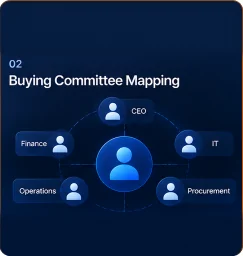
A company does not buy. People inside it evaluate, use, fund and block. The work names the roles that matter for this purchase and the questions each is likely to carry. A generic buying-group diagram is a hypothesis, not research.
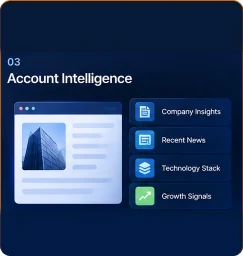
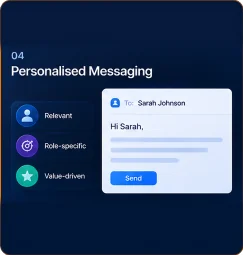
Personalization must add meaning. Inserting a company name into a generic sentence changes the surface. An accurate operating condition, a role-specific implication or permissioned proof changes the reason to pay attention.
Give different accounts only the attention their value and context justify.
Tiering is an allocation decision, not a prestige label. Research depth, message specificity and coordination should increase only where the opportunity supports them.

Focused accounts
Deep research and close coordination

Grouped accounts
Shared context with selective adaptation

Wider market
Consistent category-level communication
Decision context
How account concentration changes the work.

Everyone is busy. Almost no one is working the same accounts
You may have this problem if:
- Sales has a strategic list, marketing has a campaign list, and leadership has a slide of logos nobody will drop.
- Paid, content, and outreach each pick their own targets, then meet as strangers on the same account.
- Personalization means a company name dropped into a paragraph that could have been sent to anyone.
- Reporting celebrates clicks, form fills, and influenced pipeline while nobody can say whether a named account moved.
- The same twelve must-win names have sat untouched because the program is too wide to fund depth.
- When someone finally replies, the person who answers does not know what the account has already seen.
The commercial cost is wasted depth. Research, creative, media, and senior hours are spent on companies that were never going to justify them, while the few that would never get a finished plan. Breadth looks busy. It is how must-win accounts stay untouched.










Select, understand, concentrate, interpret

Cut
Build the list and the exclusions. Tier by value and by the attention the team can actually give.

Understand
Map the people and questions inside the accounts that justify the research.

Concentrate
Point content, media, outreach, and senior time at the same argument.

Interpret
Read movement at account level. Update tiers, plans, and handoff notes as evidence arrives.
The order protects the budget. Depth is expensive. It should not be spent on a list nobody will defend, or on a tier the team cannot staff.
From target accounts to an account strategy that governs the work
ABM is not a list of good companies handed to media. The account list should determine where research, content, media and sales spend their attention, how deeply each account is treated, and what evidence causes that treatment to change.
| Target-account activity | Account-based marketing | What changes |
|---|---|---|
| A long list of desirable logos | A finite, defended account list with explicit exclusions | The organization knows where it will concentrate effort, and where it will not |
| Every account receives similar attention | Accounts are tiered by value, fit and available capacity | Research and investment match the opportunity |
| Job titles define who gets targeted | The buying group is researched inside each priority account | Activity reaches the people who evaluate, use, fund and influence the decision |
| Company-name personalization | One account argument is built from meaningful operating context | Personalization changes the reason to pay attention, not just the surface |
| Channels run their own account campaigns | Research, content, media and sales work from the same account priorities | Multiple activities reinforce one commercial argument |
| Intent automatically triggers activity | Signals are interpreted alongside account context and human judgment | Noisy activity is not mistaken for buying intent |
| Campaign metrics show performance | Account-level movement shows changes in engagement, access and conversation | Progress is judged by what is happening inside accounts, not just channel activity |
| Leads are handed to sales as contacts | Sales receives the account context, participants, argument and engagement history | The commercial conversation continues instead of restarting |
| The target list stays fixed for the campaign | Accounts and tiers change when evidence changes | Resources follow the strongest commercial case over time |
What a concentrated program puts on record
Depending on tier mix and market, the work produces:
These are plans and records a sales lead can open, not a target-account tag in the CRM. If the artifact cannot change Monday work, it is not an account plan.
An account list with inclusion rules, exclusions, and owners
A coordinated plan for content, media, and outreach
A 1:1, 1:few, and 1:many allocation the team can staff
Handoff notes that record what the account has already seen
Buying-group maps for the accounts that justify them
Account-level reporting, separate from campaign totals
An account argument and role-level implications
A review rhythm that can move an account up, down, or out
Fit and limits
Engagement needs a person who knows the account.

Works best when
Protect the human handoff with people who understand the account and can respond to its context. The conversation should feel connected to the attention that preceded it.

Reconsider when
Use a broader demand approach when the commercial team cannot sustain account-specific attention after engagement appears.
Decision guidance
When ABM justifies differentiated attention.
ABM earns its cost when a subset of accounts is valuable enough to justify deeper research, both teams will let one list govern their week including the names they drop, and someone can respond with account context rather than a script.

Account value, fit and timing matter more than the familiarity of the logo. A list with no exclusions is a wish list.
Intent and identity data guide research while human judgment determines treatment. Intent is reported as a pointer, never as a result.
Broad, low-value markets usually favor a wider demand program. Influenced pipeline that cannot be tied to named accounts is not evidence of ABM.
Questions
Questions companies ask before naming the first account list.
How many accounts belong in an ABM program?
As many as the team can understand and engage at the promised depth. Account value, market size, commercial capacity, and the hours reserved for the top tier all set the number. A 1:1 account that never receives individual research was not 1:1. It was a compliment. The list should be cut before the work is diluted.
How is this different from targeting good companies?
Attractive-account targeting still runs ordinary campaigns at better logos. ABM makes one finite list the operating system for research, media, content, and sales. If paid, content, and sales can each ignore the list without consequence, it is not ABM. It is targeting with a more expensive name.
What deal size or account value justifies ABM?
Enough value and strategic importance to pay for deeper research, coordinated attention, and senior time. There is no universal cutoff invented for your category. If the math only works when every logo is called strategic, the motion is wrong for the market.
Does every ABM program need paid media?
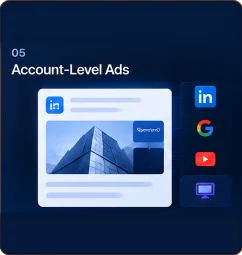
No. Paid media earns a role when it can build familiarity across enough of the buying group. For a very small strategic tier, research, useful content, direct engagement, and senior participation may carry more weight. LinkedIn Ads are often the right paid layer when the buying group is reachable there. They do not create the list.
What do 1:1, 1:few, and 1:many actually commit you to?
1:1 means individual research, tailored material, and senior involvement. 1:few means a shared problem across a cluster, with coordinated assets and selective adaptation. 1:many means lighter, scaled attention that still respects the account definition. If the treatment is identical across tiers, the labels are decoration.
How do you report ABM while pipeline is still forming?
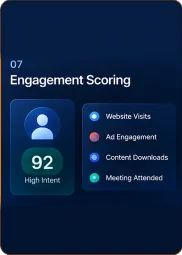
At the account. Who was reached, which roles engaged, whether the account multi-threaded, and whether sales used the context. Campaign metrics stay visible as cost and delivery checks. They do not replace account movement. Intent spikes are research notes, not wins.
What happens when an account engages?
The sequence or campaign stops being the owner. A person continues, with a record of what the account has already seen and why this participant may care. New objections, internal changes, and timing shifts return to the account plan. Without that loop, ABM is only a targeting setting.