
Paid Media
Can Meta Work for B2B? Only If Creative Does Part of the Targeting.
- Written by
- Parag Masteh, Founder, Mplan
- Published
- Updated
Meta can work for B2B when the job is creating familiarity or testing a sharp idea, and when creative helps the right people recognize themselves. It fails when you treat consumer targeting like a precise ABM system or optimize for the cheapest form fill.
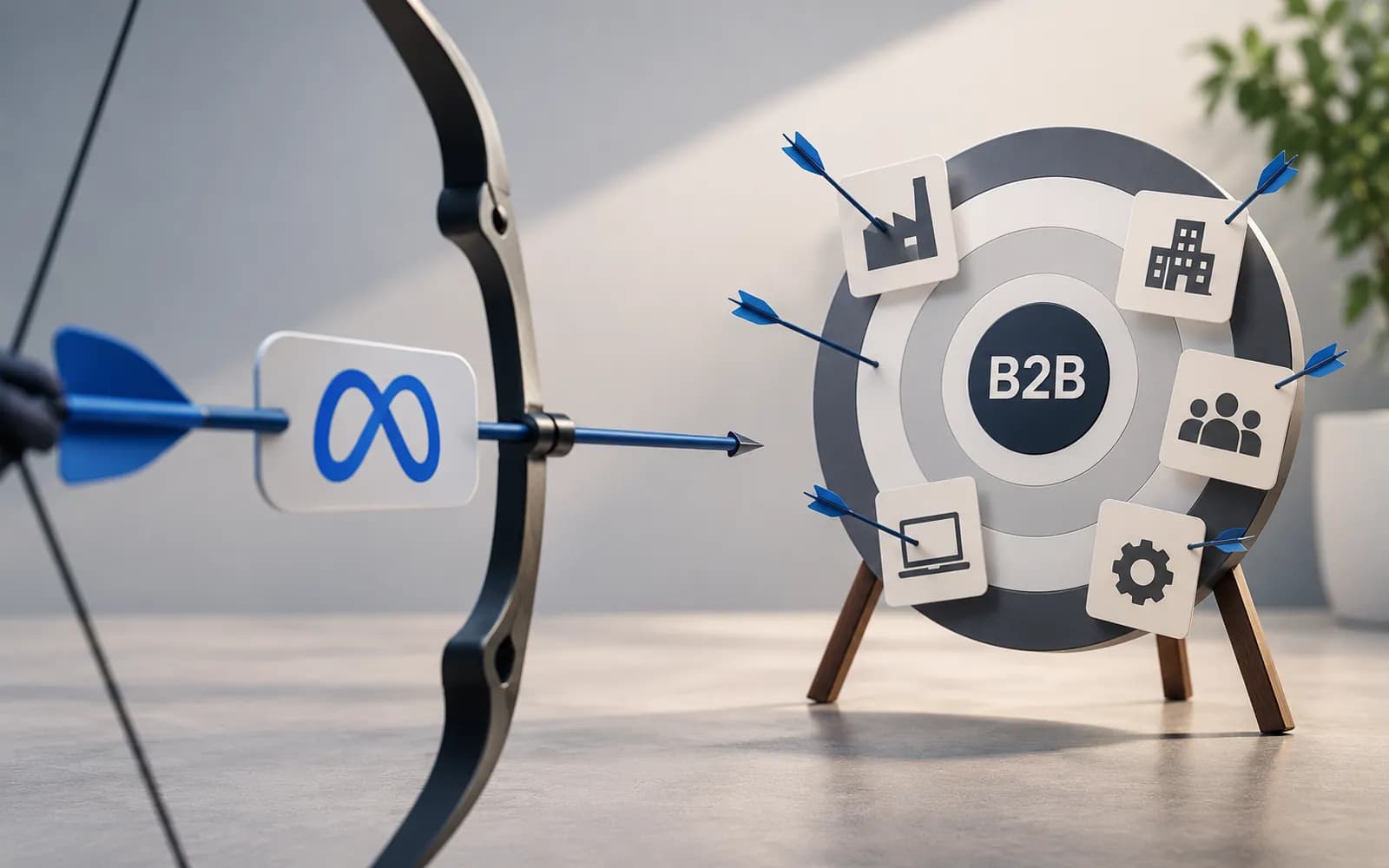
The skeptical question is fair. Professional buyers do not “live on Meta” in the way consumer shoppers do. They still see feeds. They still remember clear ideas. The channel is optional for many B2B plans. Optional is not the same as useless.
What Meta is good at in B2B
- Introducing a category or problem framing before search intent exists.
- Testing which argument earns attention quickly.
- Reaching broader professional-adjacent audiences when LinkedIn unit costs are irrational for the stage.
- Retargeting site visitors with continuity, not with a second unrelated pitch.
What it is bad at: pretending interest targeting equals job-title truth, and pretending a low CPL equals sales opportunity.
Creative is part of the targeting
On Meta, the people who stop are partly selected by the idea. A vague “transform your business” ad invites vague people. A specific problem statement invites people who feel that problem. That is not a license to be clever for its own sake. It is a requirement to be concrete.
If the creative cannot name a real situation in three seconds, no audience setting will save the campaign.
When to skip Meta
- Your market is a tiny named account list better served by LinkedIn and outbound.
- The brief exists mainly to produce form volume for a reporting chart.
- You have no creative capacity to test distinct ideas.
- Compliance makes feed advertising impractical.
Where this advice stops
Platform targeting and attribution change. What works in one category fails in another. Meta is a tool for specific jobs. It is not a personality test for whether your brand is “modern.”
How to brief a first B2B Meta test
One job (usually create demand). One primary message. Two or three creative angles that are truly different, not crop variants. A landing path that continues the argument. Success defined as qualified attention and sales-relevant response, not cheapest lead.
Run until the pre-agreed evidence threshold is reached. Ending a create-demand program early because its CPL is higher than search confuses two different media jobs.
Questions, answered
Is Meta only for B2C?
No. It is harder and more conditional in B2B. The channel can still create demand when the message and success definition are adult.
Should we mirror LinkedIn audiences on Meta?
You can try lookalikes or retargeting from site traffic, but do not assume parity with LinkedIn’s professional graph. Creative and the offer still do the heavy lifting.
Video or static first?
Whichever can state the problem fastest with assets you can actually produce well. Weak video loses to strong static. Strong video can earn attention static cannot.
How do we know Meta is working in a long cycle?
Use create-demand evidence: qualified reach, engagement quality, assisted paths, and sales narrative samples. Do not force last-click ROAS to explain a committee purchase.